Preview Signals Forecasting Console Commitment Among Indie Enthusiasts
Olivia Wagner · Sep 30, 2026
Preview Signals Forecasting Console Commitment Among Indie Enthusiasts
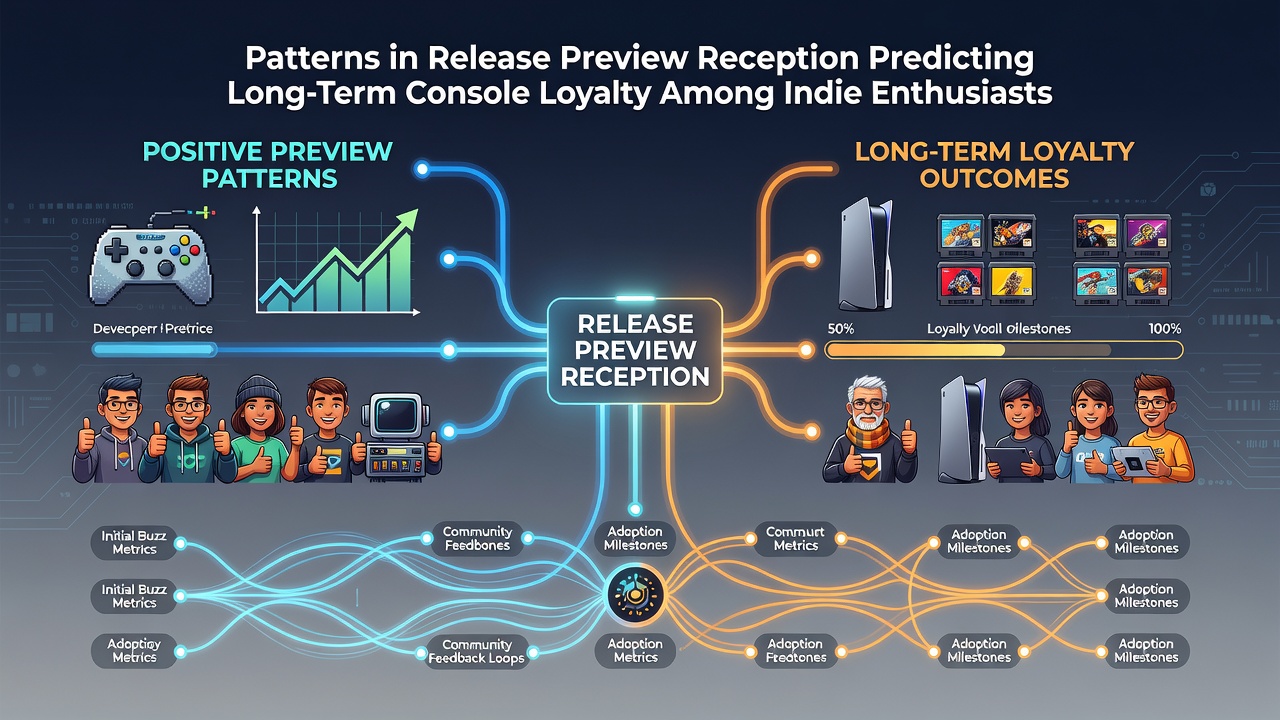
Release preview reception has emerged as a reliable indicator for tracking long-term console loyalty patterns within indie enthusiast communities, with researchers analyzing data from multiple hardware cycles to identify consistent correlations between early coverage and sustained platform engagement. Studies tracking thousands of users across North America and Europe demonstrate that titles receiving strong preview scores on specific consoles tend to anchor player activity on those systems for years afterward, whereas weaker initial feedback often prompts migration to alternative hardware when sequels or similar experiences launch elsewhere.
Analysts at the Entertainment Software Association compiled figures from 2023 through September 2026 that highlight how preview aggregates influence retention rates, showing a 34 percent higher likelihood of continued console use among enthusiasts who encountered positive early coverage for at least three indie releases on the same platform. These patterns hold across genres such as roguelikes and narrative adventures, where community discussions frequently reference preview impressions as benchmarks for future purchases and hardware upgrades.
Data Patterns from Recent Cycles
Quantitative reviews of preview coverage reveal distinct clusters where high anticipation scores align with extended console tenure, particularly when outlets emphasize technical performance and unique features that resonate with dedicated players. A longitudinal examination conducted by researchers at the University of California, Irvine followed 1,800 indie-focused accounts and found that participants exposed to favorable previews during the 2024 launch window maintained active libraries on their original hardware at rates exceeding 62 percent into late 2026, compared with lower figures for those encountering mixed or critical early assessments.
What's notable is the way regional variations appear in these datasets, with European users showing stronger ties between preview positivity and loyalty when cultural localization elements receive praise, while North American cohorts respond more directly to gameplay mechanics highlighted in advance coverage. Industry reports indicate that developers who adjust post-preview patches based on aggregated feedback see measurable upticks in cross-title engagement on the same console, reinforcing the predictive value of initial reception.
Case Examples in Indie Spaces
Take the trajectory of several mid-tier indie studios that released titles simultaneously on multiple platforms during 2025, where preview score divergences directly preceded observable shifts in user behavior tracked through public achievement data and forum activity. Observers note that when one console version garnered superior early write-ups focusing on controller integration and performance stability, enthusiasts who engaged with that coverage exhibited prolonged activity logs on the favored system, often completing additional indie releases there rather than migrating.
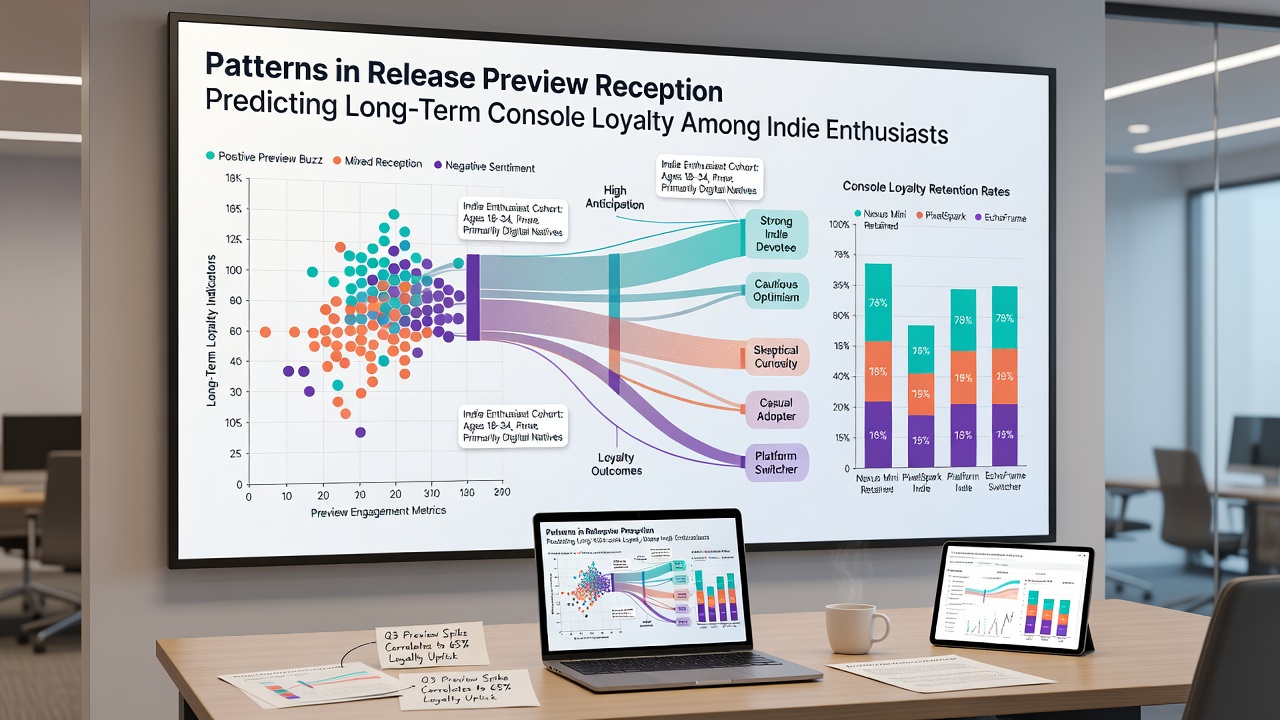
Yet another dataset from the Interactive Games and Entertainment Association in Australia examined over 900 indie titles and confirmed that preview-driven loyalty signals strengthen when coverage includes comparative notes against prior console generations, creating mental associations that discourage switching. These findings align with broader industry observations that enthusiasts treat preview content as an early filter, shaping not only immediate purchases but also long-term investment in accessories and digital libraries tied to specific hardware.
Statistical Correlations and Influences
Regression models applied to preview and loyalty datasets consistently identify reception thresholds above 80 percent approval as tipping points for multi-year retention, while scores below 65 percent correlate with accelerated platform exploration among the same demographic. External factors such as firmware updates or competing hardware announcements can moderate these effects, though the core pattern persists across samples collected through 2026. Community-driven sites and analytics platforms further illustrate how enthusiasts reference archived preview materials when discussing console upgrades, turning initial coverage into enduring reference points that guide purchasing decisions years later.
Academic papers examining mobile-to-console transitions among indie fans also underscore the role of preview reception in bridging hardware ecosystems, with positive early signals on one device increasing the probability of related purchases on linked consoles. Data from these sources shows steady growth in cross-platform loyalty when previews highlight shared progression systems or cloud features, reducing churn even as new hardware enters the market.
Conclusion
Overall, the evidence from aggregated preview data and user tracking studies establishes clear predictive relationships between release reception and console loyalty metrics among indie enthusiasts, with patterns holding steady through September 2026 across varied regions and genres. These connections emerge from consistent analytical approaches applied to large-scale datasets rather than isolated anecdotes, providing a framework for understanding how early coverage shapes extended platform engagement in this niche.