Tournament Broadcast Insights Guiding Indie Cross-Platform Development
Rafael Griffin · Nov 25, 2026
Tournament Broadcast Insights Guiding Indie Cross-Platform Development
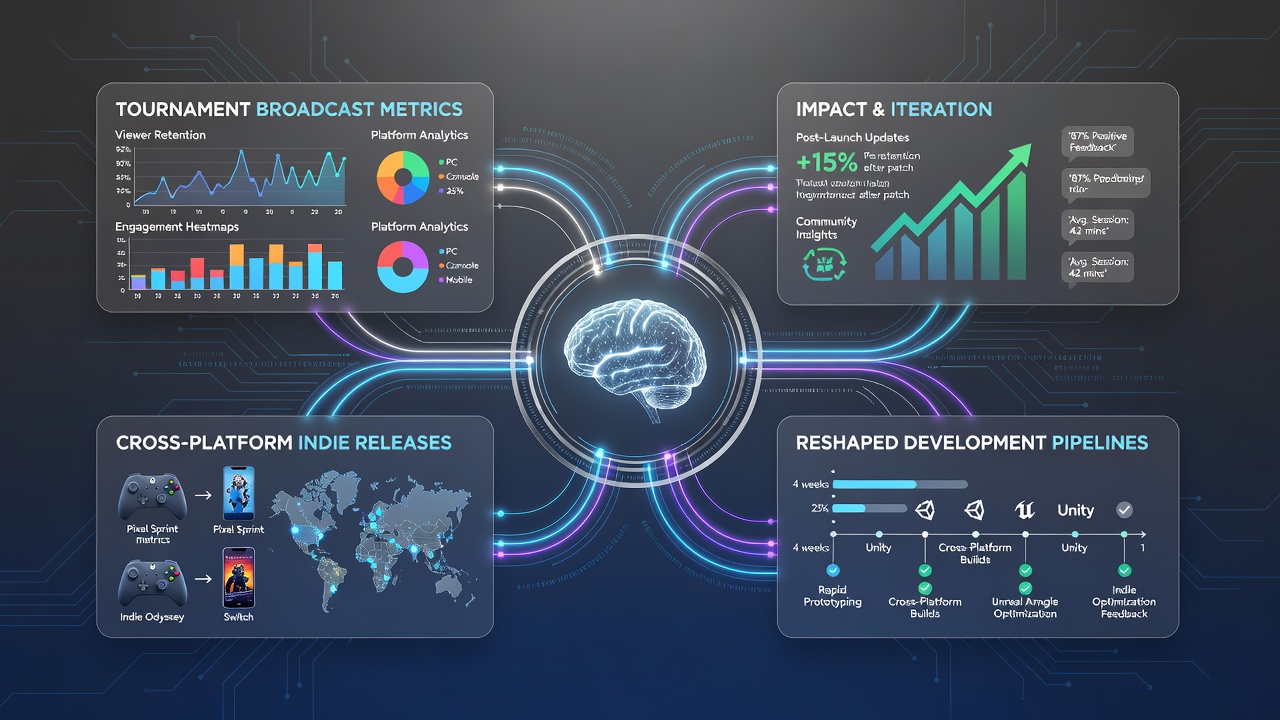
Tournament broadcasts generate detailed viewer data that developers track through engagement peaks, drop-off moments, and feature popularity, and these patterns now feed directly into scheduling decisions for cross-platform indie releases. Studios monitor real-time chat reactions alongside retention graphs to identify which mechanics hold attention across different audience segments, then adjust development timelines accordingly.
Data Collection Methods in Live Events
Broadcast platforms capture timestamps for every viewer interaction, from ability usage spikes during competitive matches to menu navigation pauses that signal confusion. Developers integrate these feeds with internal telemetry, allowing teams to correlate broadcast performance with in-game behavior across PC, console, and mobile builds. November 2026 tournaments showed consistent patterns where certain camera angles increased dwell time by measurable margins, prompting several studios to prioritize similar presentation layers in their upcoming ports.
Researchers at the European Games Developer Federation have documented how these datasets influence resource allocation, with smaller teams reallocating QA hours toward platform-specific input mapping after observing controller drop rates during high-stakes matches. The process turns passive viewing statistics into active pipeline checkpoints, where milestone reviews now include broadcast-derived heatmaps rather than relying solely on internal playtests.
Impact on Feature Prioritization
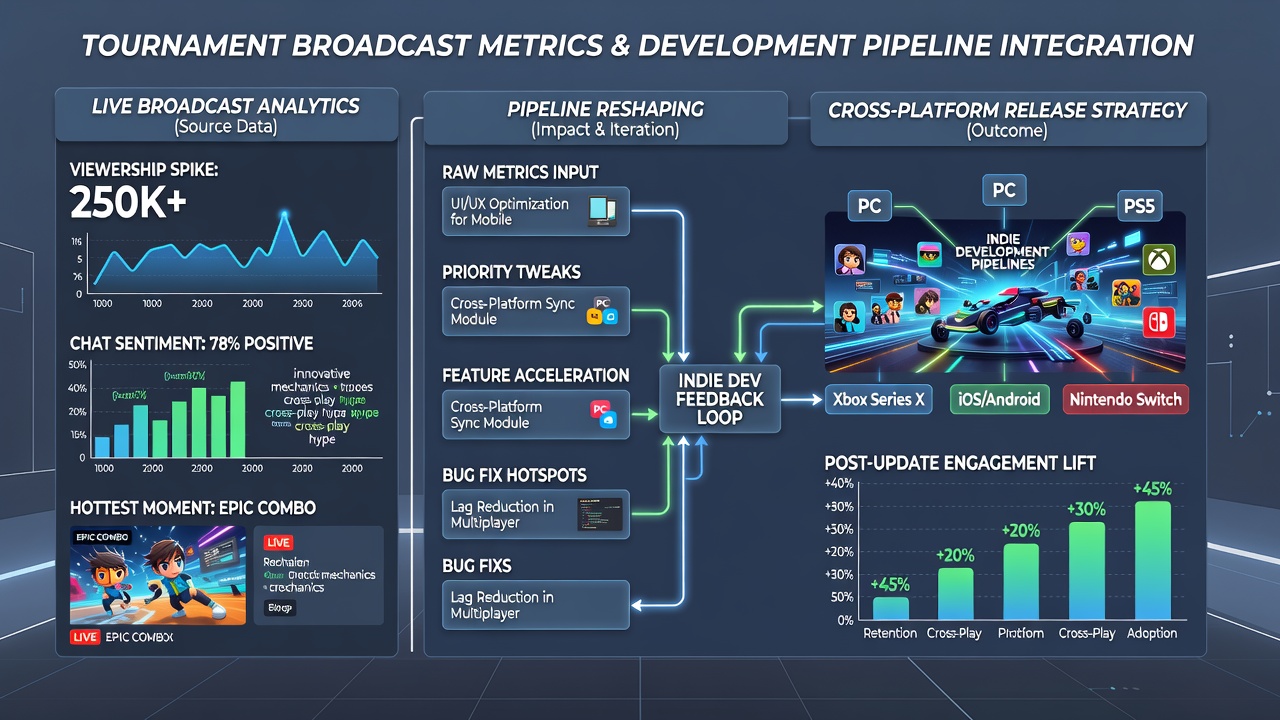
Indie developers review aggregated viewer retention curves to decide which systems receive early cross-platform optimization. A mechanic that sustains audience interest through multiple tournament rounds often advances in the build schedule, while underperforming elements shift to later patches. This approach has led teams to implement unified netcode frameworks earlier in production cycles, since broadcast data revealed latency complaints spiking during international events regardless of platform.
One studio adjusted its release window for a multiplayer title after tournament metrics indicated stronger evening engagement on console streams compared with mobile, leading to synchronized updates that addressed input buffering on both targets simultaneously. Such adjustments reduce the traditional staggered rollout model and replace it with coordinated launches informed by audience behavior patterns observed in live settings.
Platform-Specific Adjustments Driven by Viewership
Regional broadcast differences highlight hardware variations that affect player retention. Data from North American events showed higher completion rates for controller-based navigation sequences, while European streams indicated stronger performance with touch-optimized interfaces in the same title. Developers respond by embedding these regional insights into their pipeline branching strategies, creating conditional asset loads that activate based on detected platform and input method.
Academic analysis from the University of Melbourne’s Digital Games Research Centre has tracked how these viewer-derived priorities alter testing protocols, with automated scripts now simulating broadcast audience flows rather than generic usage scenarios. The result appears in tighter iteration loops where platform certification passes incorporate viewer satisfaction proxies collected during competitive showcases.
Pipeline Workflow Changes
Production calendars incorporate recurring review gates tied to major tournament calendars. After each event, analytics teams deliver summarized reports that flag underutilized mechanics or praised visual effects, and these findings translate into concrete task assignments for the next sprint. Cross-platform coordination meetings now reference broadcast timestamps alongside traditional bug trackers, ensuring alignment across engineering, art, and design departments.
Teams have adopted shared dashboards that merge tournament metrics with internal build health indicators, allowing producers to forecast potential delays when viewer data diverges sharply from expected platform performance. This integration shortens the feedback loop between public competition and internal development, replacing lengthy post-release analysis periods with proactive adjustments during active production phases.
Conclusion
Broadcast-derived metrics continue to embed themselves into the core decision points of cross-platform indie pipelines, shifting focus from isolated platform testing toward unified strategies informed by live audience behavior. As tournament coverage expands, the volume and granularity of available data increase, giving developers more precise signals for timing releases, refining features, and synchronizing updates across hardware targets.